Different Project Management Technologies Meant for Different Industries
Every individual has a different approach in dealing with a particular problem. When you work in a team with different type of people, managing all the differences can be quite a challenge. It can be quite a nightmare for the project manager to manage dependencies in a cross functional team, where priorities differ and so do personalities.
In your entire career as a project manager, you shall never come across a client who would not make addition or alteration in their demands and needs. Under such circumstances, managing resources and allocating them for specific tasks becomes a lot more difficult. If you are not able to anticipate the risk, entire plan of the project can go through the roof.
You can adopt various methodologies to ensure that your project is easily manageable based on the project requirement. Read the below mentioned points which can help you to get some strategic ideas on which method suits which situation the best.
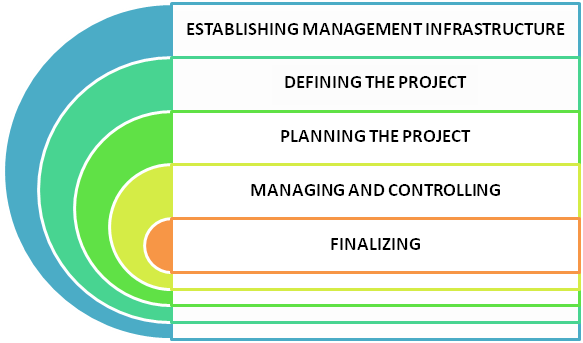
Waterfall Project Management
The waterfall method has a very linear approach or you can better phrase it as a top down approach. In this methodology, the project manager gets the requirements and then he sits down to make a realistic project analysis of the requirement and determines how many resources he would need to complete the project. Once the analysis is over, the designing phase begins and different members of the team contribute in this sphere with his design and input. Once the designing phase is over, the next phase is known as implementation and is followed up by testing, before the project is deployed. The entire setup is quite linear and is commonly found in many companies, mostly in software industry.
Agile Project Management
This is a more dynamic methodology, where a project is formulated and processed depending on the method of trail and errors. There is no linear path and the project manager and his team is open to accept requirements and feedback from the client or other members of the team. This system is very helpful, when the management has to work under situations which have continuously changing requirements and drastic shift in assignments. This approach is ideal for any company where the size of the project is small.
Critical Path
This is altogether different approach, which is drastically different from that of agile or waterfall project methodologies. This methodology works by a step by step approach and aims at addressing a problem at a given point of time. In a critical path approach, it is believed that each project is comprised of a certain set of core elements known as critical chain. As per this method, a great amount of emphasis is laid on the allocating resources on the core elements so that the important elements of the project can function smoothly. Reasonable resources are allocated to different resources and a considerable amount of buffer is maintained to ensure that no one of the aspect of the project suffers a backlog.
Prince 2
This is one of the best developed and process oriented methodologies which were designed by the government of United Kingdom in 1996. It is a process oriented method, which divided the project into multiple stages. Each stage has its own set of plans and processes which it follows and syncs it with the other stages independently. Many people claim that it’s not a very feasible design however; it depends on the project managers to decide how far they think this method would fulfill their needs.
Besides these four types of project management methodology there are other type of methodology like Kanban technique, Six Sigma and Prism and many more. Each of them has its own set of unique functionality, which needs to be tried and tested before they can be adapted for managing a project.
Find a course provider to learn PMP
Java training | J2EE training | J2EE Jboss training | Apache JMeter trainingTake the next step towards your professional goals in PMP
Don't hesitate to talk with our course advisor right now
Receive a call
Contact NowMake a call
+1-732-338-7323Take our FREE Skill Assessment Test to discover your strengths and earn a certificate upon completion.
Enroll for the next batch
PMP Hands-on Training with Job Placement
- Apr 15 2026
- Online
PMP Hands-on Training with Job Placement
- Apr 16 2026
- Online
PMP Hands-on Training with Job Placement
- Apr 17 2026
- Online
Related blogs on PMP to learn more
What are the 5 phases of project management?
A streamlined approach to ensure project success by breaking it into five essential stages: Initiation, Planning, Execution, Monitoring & Controlling, and Closing. Each phase builds on the other, guiding the team from concept to completion with clear

How a PMP Certification Boosts Your Salary Potential in the USA
In the competitive landscape of project management, obtaining a Project Management Professional (PMP) certification can be a transformative step for your career. This globally recognized credential validates your skills and knowledge and significantl
How PMP Credential Positively Impacts Your Salary in the USA
In the competitive landscape of project management, obtaining a Project Management Professional (PMP) certification can be a transformative step for your career.
Guide to Resources for Product Managers
Navigating the world of product management can be challenging, especially for newcomers. This guide will equip you with top-trending resources to enhance your skills and knowledge as a product manager.
Principles of Management
Learn about the key principles and levels of management, including insights from Henry Fayol, to understand how effective planning, organizing, and directing can drive organizational success.
How did I successfully complete PMP certification course?
Our student's review of how they successfully completed PMP Certification course.
Top 10 Project Management Tools for Any Task
Explore the top 10 project management tools for any task and delve into the pros and cons of project management tools, empowering you to make informed decisions for your project management needs.

What are the qualities an IT project manager should have?
Top five qualities should be an IT project manager’s asset The role of an IT project manager is to plan, monitor, manage, and strategize the project and the team. They are supposed to accomplish the given task within a deadline of time and cost. The
What are PDUs -How to earn PDUs for PMP
What are PDUs? PDUs are abbreviation for Professional Development Units, were a one hour is blocked for learning, teaching and volunteering. How to earn PDUs for PMP renewal? There are two ways to earn PDUs for PMP renewal and they are Education PDUs

List of Best New York City Project Management Certification Training Providers
In today’s competitive job market, credentials matter more than ever. With Project Management Professional (PMP)® credentials in NYC you are more marketable also you will have access to better opportunities. Project Management Certification NYC ensur
Latest blogs on technology to explore

Drug Safety & Pharmacovigilance: Your 2026 Career Passport to a Booming Healthcare Industry!
Why This Course Is the Hottest Ticket for Science Grads & Healthcare Pros (No Lab Coat Required!)" The Exploding Demand for Drug Safety Experts "Did you know? The global pharmacovigilance market is set to hit $12.5B by 2026 (Grand View Research, 202

Launch Your Tech Career: Why Mastering AWS Foundation is Your Golden Ticket in 2026
There’s one skill that can open all those doors — Amazon Web Services (AWS) Foundation
Data Science in 2026: The Hottest Skill of the Decade (And How Sulekha IT Services Helps You Master It!)
Data Science: The Career that’s everywhere—and Nowhere Near Slowing Down "From Netflix recommendations to self-driving cars, data science is the secret sauce behind the tech you use every day. And here’s the kicker: The U.S. alone will have 11.5 mill

Salesforce Admin in 2026: The Career Goldmine You Didn’t Know You Needed (And How to Break In!)
The Salesforce Boom: Why Admins Are in Crazy Demand "Did you know? Salesforce is the 1 CRM platform worldwide, used by 150,000+ companies—including giants like Amazon, Coca-Cola, and Spotify (Salesforce, 2025). And here’s the kicker: Every single one

Python Power: Why 2026 Belongs to Coders Who Think in Python
If the past decade was about learning to code, the next one is about coding smarter. And in 2026, the smartest move for any IT enthusiast is learning Python — the language that powers AI models, automates the web, and drives data decisions across ind

The Tableau Revolution of 2025
"In a world drowning in data, companies aren’t just looking for analysts—they’re hunting for storytellers who can turn numbers into decisions. Enter Tableau, the #1 data visualization tool used by 86% of Fortune 500 companies (Tableau, 2024). Whether
From Student to AI Pro: What Does Prompt Engineering Entail and How Do You Start?
Explore the growing field of prompt engineering, a vital skill for AI enthusiasts. Learn how to craft optimized prompts for tools like ChatGPT and Gemini, and discover the career opportunities and skills needed to succeed in this fast-evolving indust
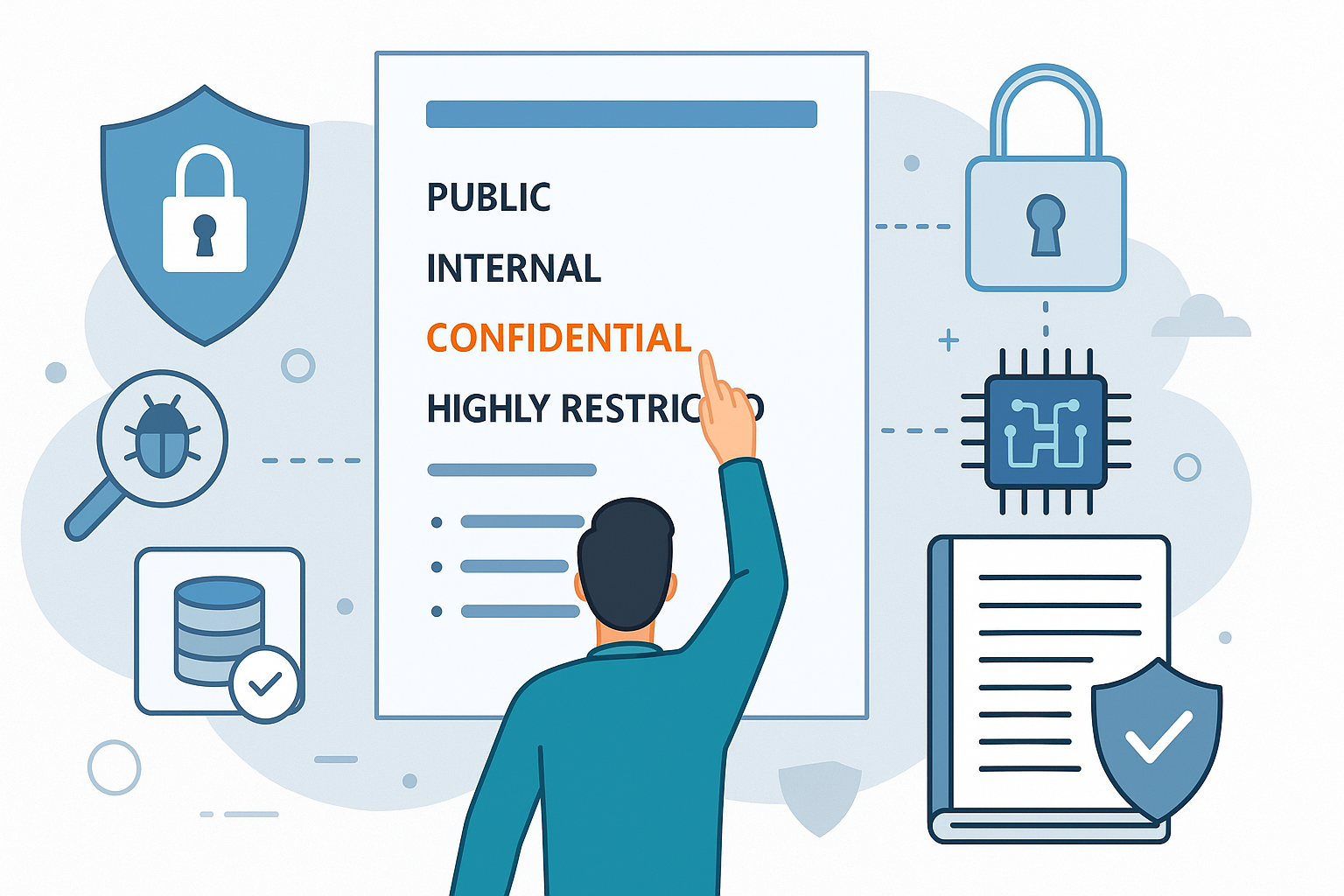
How Security Classification Guides Strengthen Data Protection in Modern Cybersecurity
A Security Classification Guide (SCG) defines data protection standards, ensuring sensitive information is handled securely across all levels. By outlining confidentiality, access controls, and declassification procedures, SCGs strengthen cybersecuri

Artificial Intelligence – A Growing Field of Study for Modern Learners
Artificial Intelligence is becoming a top study choice due to high job demand and future scope. This blog explains key subjects, career opportunities, and a simple AI study roadmap to help beginners start learning and build a strong career in the AI

Java in 2026: Why This ‘Old’ Language Is Still Your Golden Ticket to a Tech Career (And Where to Learn It!
Think Java is old news? Think again! 90% of Fortune 500 companies (yes, including Google, Amazon, and Netflix) run on Java (Oracle, 2025). From Android apps to banking systems, Java is the backbone of tech—and Sulekha IT Services is your fast track t