How Security Classification Guides Strengthen Data Protection in Modern Cybersecurity
What Is a Security Classification Guide in Cybersecurity?
In today’s digital world, organizations handle massive volumes of sensitive information—from customer records to confidential business intelligence. To protect this data effectively, cybersecurity teams rely on a structured document known as a Security Classification Guide (SCG). This guide defines confidentiality levels, handling sensitive data rules, and the exact conditions under which information can be accessed, shared, or declassified.
A well-implemented SCG strengthens an organization’s defense strategy, aligns with regulations, and supports information assurance by ensuring data is consistently protected across all teams and systems.
Understanding the Purpose of a Security Classification Guide
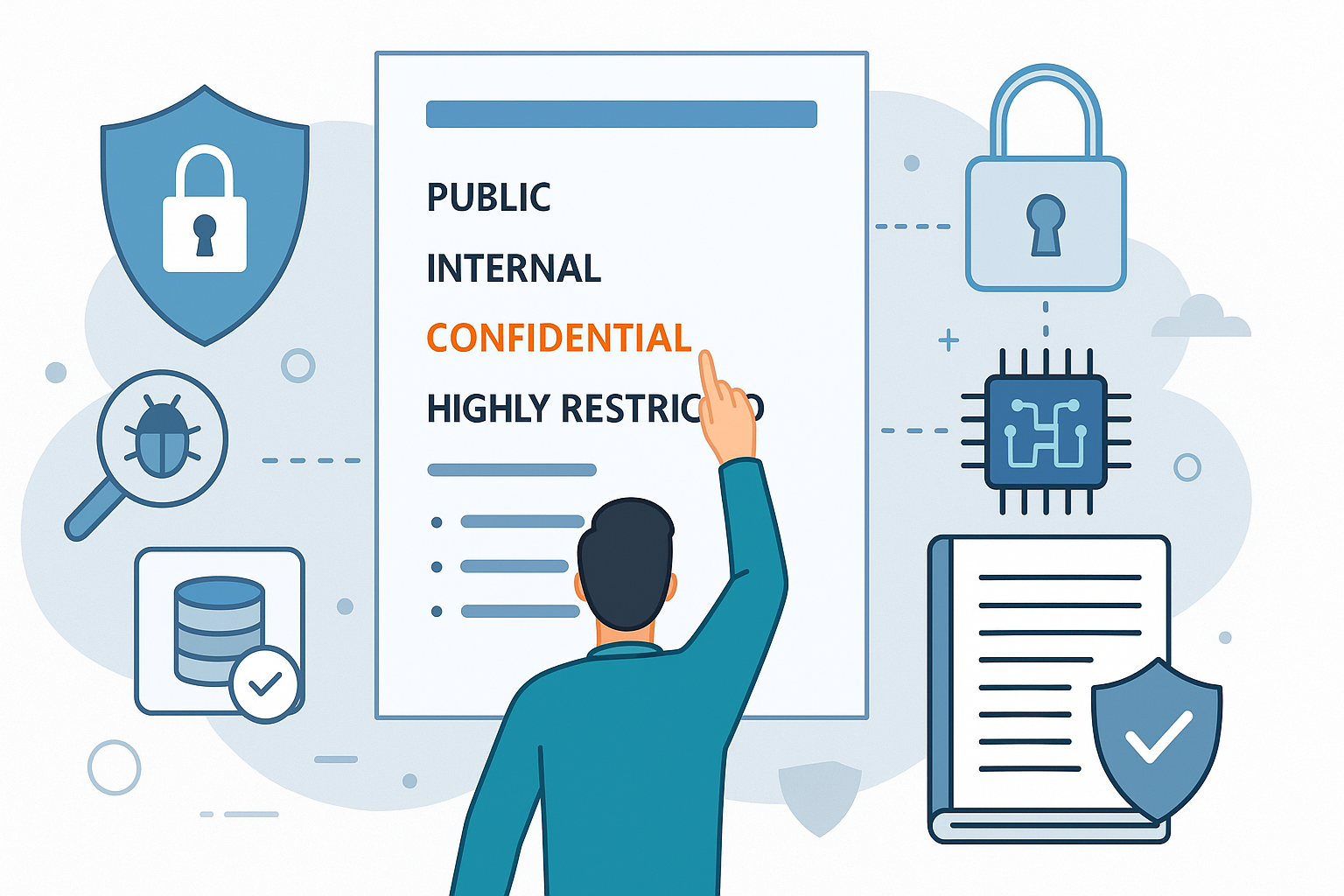
A Security Classification Guide is an official document that provides precise instructions on how different types of information must be classified and protected. It acts as an extension of the organization’s data classification policy, helping employees understand whether information is “Public,” “Internal,” “Confidential,” or “Highly Restricted.”
The SCG clarifies:
- What data belongs to each classification level
- Who can access the information
- How information should be stored, transmitted, and disposed
- When and how declassification procedures can be applied
This ensures consistent, organization-wide compliance with data protection standards, supporting both operational security and regulatory requirements.
How SCGs Strengthen Data Security
A robust Security Classification Guide brings multiple cybersecurity elements together:
1. Clear Definition of Confidentiality Levels
The guide outlines the impact of unauthorized disclosure and sets rules for:
- Public information
- Internal data
- Restricted or confidential information
- Highly sensitive or regulated data
These confidentiality levels ensure that each piece of information receives the right protection.
2. Access Control Rules for Every Classification
The SCG integrates strict access control rules to ensure only authorized individuals can view or modify sensitive data. This includes guidelines related to:
- Role-based access control (RBAC)
- Multi-factor authentication (MFA)
- Least privilege principle
- User access reviews
These practices reduce internal risks and ensure sensitive information is only accessed when absolutely necessary.
3. Handling and Storing Sensitive Data
The guide provides clear procedures for handling sensitive data, including storage, encryption, sharing protocols, and destruction guidelines to maintain strong data governance.
Security Classification Guides and Modern Cybersecurity Technologies
Today’s cybersecurity operations rely heavily on automated systems. SCGs support these technologies by defining the rules that automated tools follow. Examples include:
- Automated Document Classification for categorizing files based on sensitivity
- Threat Intelligence Analysis to detect emerging cyber risks
- Anomaly Detection in Communication to identify suspicious network behavior
- Log File Parsing for reviewing system activity and detecting deviations
When combined with a strong classification guide, these technologies enhance visibility and reduce response time during security events.
The Role of SCGs in Vulnerability Management
Security classification works hand-in-hand with vulnerability management to prevent exploitation and system compromise. Under the Vulnerability Assessment Cluster, the SCG supports activities such as:
- Vulnerability scanning to identify weaknesses
- Penetration testing to simulate real-world attacks
- Reviewing the CVE database for known vulnerabilities
- Applying structured risk assessment methodologies
By linking data sensitivity to vulnerability priorities, organizations can focus their security resources where they matter most.
SCGs and Access Control Management
Access control is one of the foundational components of a classification guide. The Access Control Cluster aligns classification with permissions using tools such as:
- Role-based access control (RBAC) for granular permissions
- Multi-factor authentication (MFA) for identity verification
- Least privilege principle to minimize excess access
- Regular user access reviews to detect unauthorized privileges
These controls help enforce information segmentation and reduce the risk of insider misuse.
SCGs in Incident Response and Crisis Handling
During a cyber incident, knowing which data type is affected determines urgency, response strategy, and reporting obligations. The Incident Response Cluster includes:
- Incident handling procedures to contain and mitigate threats
- Data breach notification requirements to comply with laws
- Forensics analysis to understand what happened
- Ensuring processes fit into the organization’s business continuity plan
SCGs guide incident teams to prioritize high-risk, high-sensitivity data first during a breach.
Compliance and Regulatory Requirements
A Security Classification Guide also ensures that an organization meets industry regulations. It aligns with the Compliance and Regulation Cluster, including:
- GDPR compliance for EU data subjects
- HIPAA data protection for healthcare records
- NIST framework for standardized security controls
- Required regulatory reporting during incidents
By mapping data to regulatory categories, organizations avoid penalties, strengthen information assurance, and maintain customer trust.
Conclusion
A Security Classification Guide is a crucial cybersecurity asset that creates clarity, consistency, and accountability in how organizations protect their information. By defining data classification policy, confidentiality levels, access control rules, and declassification procedures, an SCG ensures every team member handles information securely and in compliance with data protection standards.
When integrated with modern cybersecurity tools like Automated Document Classification, Threat Intelligence Analysis, Anomaly Detection in Communication, and best-practice clusters such as Vulnerability Management, Access Control, Incident Response, and Compliance frameworks, the SCG becomes a powerful cornerstone of a strong cybersecurity posture.
For professionals or students looking to build skills in cybersecurity—including data protection, classification frameworks, and incident response—Sulekha connects learners with trusted cybersecurity training institutes. These courses help you understand real-world applications of SCGs, strengthen your technical foundation, and prepare you for high-demand roles in the cybersecurity industry.
Find a course provider to learn Cyber Security
Java training | J2EE training | J2EE Jboss training | Apache JMeter trainingTake the next step towards your professional goals in Cyber Security
Don't hesitate to talk with our course advisor right now
Receive a call
Contact NowMake a call
+1-732-338-7323Take our FREE Skill Assessment Test to discover your strengths and earn a certificate upon completion.
Enroll for the next batch
hands on cyber security training
- Jun 22 2026
- Online
hands on cyber security training
- Jun 23 2026
- Online
hands on cyber security training
- Jun 24 2026
- Online
hands on cyber security training
- Jun 25 2026
- Online
hands on cyber security training
- Jun 26 2026
- Online
Related blogs on Cyber Security to learn more
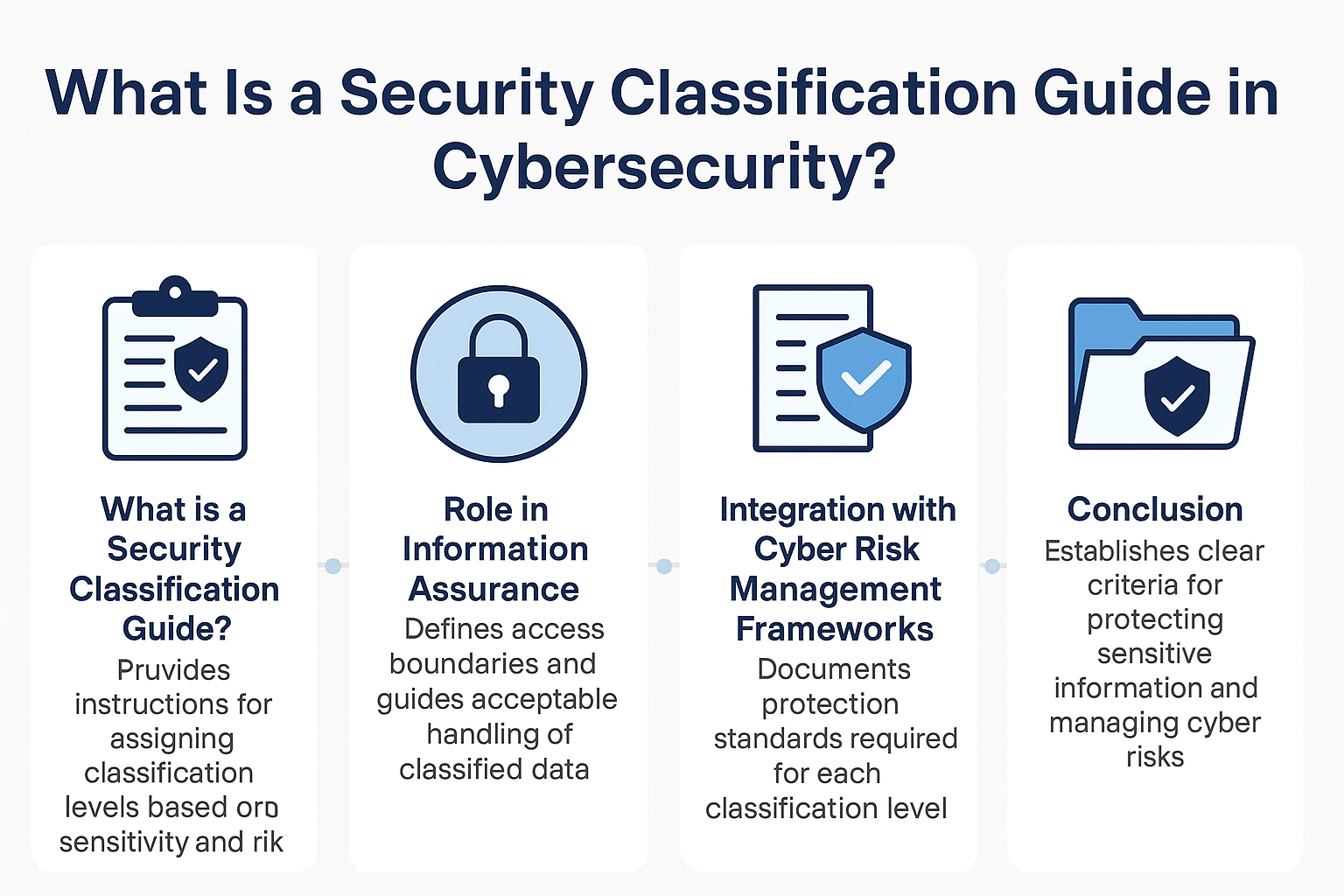
What Is a Security Classification Guide in Cybersecurity?
A Security Classification Guide (SCG) defines how to categorize information assets by sensitivity, with clear instructions from authorized officials to ensure consistent, compliant data handling.
Cybersecurity Training: Powering Digital Defense
Explore top cybersecurity training programs in the USA to meet rising demand in digital defense. Learn about certifications, salaries, and career opportunities in this high-growth field.
What Does a Cybersecurity Analyst Do? 2025
Discover the vital role of a Cybersecurity Analyst in 2025, protecting organizations from evolving cyber threats through monitoring, threat assessment, and incident response. Learn about career paths, key skills, certifications, and why now is the be
What essential skills and trends should cybersecurity professionals navigate in 2024?
Cybersecurity professionals in 2024 must master a diverse skillset, from cloud security and AI to soft skills like communication and problem-solving, to stay ahead of evolving cyber threats and regulations.
What Does a Cybersecurity Analyst Do?
Learn about the role of a Cybersecurity Analyst, responsible for protecting an organization's computer networks from cyberattacks.
10 Popular Cybersecurity Certifications
From CompTIA Security+ to CISSP, these certifications can boost your career and demonstrate your commitment to protecting computer systems and networks.

What are the most popular technical certifications for future career advancement?
Unlock your potential with insights into 5 popular technical certifications for future career growth, spanning cybersecurity, blockchain, cloud computing and more. Explore pathways for professional advancement today.
How to Become a Security Architect: 2024 Career Guide
How to Become a Security Architect: 2024 Career Guide In today's fast-paced and digitally interconnected world, the role of a Security Architect
Tips to get a job in top companies - Find out about the strategy and preparation to get started with Cybersecurity
As companies adopt cloud services, IoT devices, and remote work solutions, their attack surface expands. Cybersecurity experts are essential to ensure the security of these technologies and networks. The expertise of cybersecurity specialists bolster
Latest blogs on technology to explore

Drug Safety & Pharmacovigilance: Your 2026 Career Passport to a Booming Healthcare Industry!
Why This Course Is the Hottest Ticket for Science Grads & Healthcare Pros (No Lab Coat Required!)" The Exploding Demand for Drug Safety Experts "Did you know? The global pharmacovigilance market is set to hit $12.5B by 2026 (Grand View Research, 202

Launch Your Tech Career: Why Mastering AWS Foundation is Your Golden Ticket in 2026
There’s one skill that can open all those doors — Amazon Web Services (AWS) Foundation
Data Science in 2026: The Hottest Skill of the Decade (And How Sulekha IT Services Helps You Master It!)
Data Science: The Career that’s everywhere—and Nowhere Near Slowing Down "From Netflix recommendations to self-driving cars, data science is the secret sauce behind the tech you use every day. And here’s the kicker: The U.S. alone will have 11.5 mill

Salesforce Admin in 2026: The Career Goldmine You Didn’t Know You Needed (And How to Break In!)
The Salesforce Boom: Why Admins Are in Crazy Demand "Did you know? Salesforce is the 1 CRM platform worldwide, used by 150,000+ companies—including giants like Amazon, Coca-Cola, and Spotify (Salesforce, 2025). And here’s the kicker: Every single one

Python Power: Why 2026 Belongs to Coders Who Think in Python
If the past decade was about learning to code, the next one is about coding smarter. And in 2026, the smartest move for any IT enthusiast is learning Python — the language that powers AI models, automates the web, and drives data decisions across ind

The Tableau Revolution of 2025
"In a world drowning in data, companies aren’t just looking for analysts—they’re hunting for storytellers who can turn numbers into decisions. Enter Tableau, the #1 data visualization tool used by 86% of Fortune 500 companies (Tableau, 2024). Whether
From Student to AI Pro: What Does Prompt Engineering Entail and How Do You Start?
Explore the growing field of prompt engineering, a vital skill for AI enthusiasts. Learn how to craft optimized prompts for tools like ChatGPT and Gemini, and discover the career opportunities and skills needed to succeed in this fast-evolving indust
How Security Classification Guides Strengthen Data Protection in Modern Cybersecurity
A Security Classification Guide (SCG) defines data protection standards, ensuring sensitive information is handled securely across all levels. By outlining confidentiality, access controls, and declassification procedures, SCGs strengthen cybersecuri

Artificial Intelligence – A Growing Field of Study for Modern Learners
Artificial Intelligence is becoming a top study choice due to high job demand and future scope. This blog explains key subjects, career opportunities, and a simple AI study roadmap to help beginners start learning and build a strong career in the AI

Java in 2026: Why This ‘Old’ Language Is Still Your Golden Ticket to a Tech Career (And Where to Learn It!
Think Java is old news? Think again! 90% of Fortune 500 companies (yes, including Google, Amazon, and Netflix) run on Java (Oracle, 2025). From Android apps to banking systems, Java is the backbone of tech—and Sulekha IT Services is your fast track t