How To Make Quick Decisions With Microsoft Business Intelligence?
Business Intelligence tools are typically designed to extract, sort, analyze, transform and report data for business intelligence. These are a type of application software. Usually these tools get the data from a data warehouse or a data mart.
Business intelligence deploys techniques to transform huge amounts of raw data into usable and meaningful information with which the enterprises may make quick planning and efficient decision making. Microsoft Business Intelligence is capable of handling huge amounts of raw and unstructured data and to transform it into meaningful information to offer new strategic business opportunities.
Microsoft provides number of tools to handle the business data which can be used with Visual Studio interface.
Database Management Systems
A database or DB is an organized collection of data. The data may be organized in required way in order to support the processes which require this information.
Database Management Systems or DBMS are application software which interacts with the users or system or database or other third party applications in order to retrieve, sort and analyze the business data. DBMS systems are designed to allow creation, definition, querying, updating and administering the DBs.
ETL Tools (Extracts, Transform, Load)
ETL refers to a DB usage process in which it Extracts data from different data sources, Transforms the data to store it in required format for querying and analyzing purposes, Loads the data into the final target usually a DataMart or data ware house. ETL may take the data from homogeneous or heterogeneous systems maybe in different data formats like SQL, txt, xls etc. and stores the data in required format into the Data warehouse units.
Tools of MSBI (Microsoft Business Intelligence)
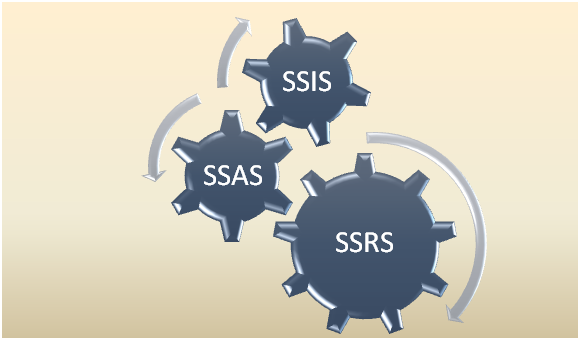
Three tools are offered by MSBI to perform ETL, Analysis and Reporting functionalities. They are SSIS, SSAS and SSRS.
1. SQL Server Integration Service (SSIS)
SSIS is an ETL tool of MSBI. It is used to build high-performance workflow solutions and data integration. This also includes the operations for Data warehouse- extract, transform, Load. The data can be retrieved from various locations or different formats, processed and saved into a centralized repository like a Data Mart or Data Warehouse. SSIS includes graphical tools to build or debug.
Data Warehouse or Data Mart
These are centralized repository of data which is mainly used for business analysis purposes or reporting. The repository stores integrated data from multiple sources in different formats. Data Warehouse stores historical and current data which can be retrieved to create reports, analyze the data and compare them. This helps the top management to get a quick glance about the business trend and to take quick decisions based on the prediction.
A DataMart usually consists of summarized information and it forms one of the part of Data Warehouse say finance, logistics, etc.
2. SQL Server Analysis Service (SSAS)
This software suite converts two dimensional data into multi-dimensional data model i.e. OLTP. This facilitates the analysis of large volume of data.
The main advantages of SSAS are:
- Key performance Indicator (KPI)
- Score card
- Slice, dice, drill down functionalities
- Good performance
- Multi-dimensional analysis
- Security
3. SQL Server Reporting Service (SSRS)
Microsoft’s SSRS is an enterprise reporting platform. It supports traditional and interactive reports through the custom applications or over the web. It supports two dimensional and multi-dimensional data sources.
Below mentioned are some of the features of SSRS:
- Web based access to reports
- Ad-hoc reporting support
- Retrieve data from various source
- Export functionality supporting lots of format.
- Display reports in various ways like tabular, chart, Gauge formats etc
- Report builder to customize the reports for end user.
- Easy subscriptions options
With the Microsoft’s BI and analytics tool, employees can make quick and informed decisions based on the data. The tools combine existing business data, external data from third party applications and also huge raw data. The comprehensive BI- analytics tool provide end-to-end solutions to every user to handle the organization data.
Find a course provider to learn Microsoft Business Intelligence
Java training | J2EE training | J2EE Jboss training | Apache JMeter trainingTake the next step towards your professional goals in Microsoft Business Intelligence
Don't hesitate to talk with our course advisor right now
Receive a call
Contact NowMake a call
+1-732-338-7323Take our FREE Skill Assessment Test to discover your strengths and earn a certificate upon completion.
Enroll for the next batch
microsoft bi training
- Jun 24 2026
- Online
microsoft bi training
- Jun 25 2026
- Online
microsoft bi training
- Jun 26 2026
- Online
Related blogs on Microsoft Business Intelligence to learn more

How Microsoft Business Intelligence boost the IT enterprises in 2017?
It is evident that Microsoft had risen from several defeats and proved itself a significant software and hardware influencer in the year 2016. There were several acquisitions like LinkedIn which took everyone by nothing but surprise. Well, it has det
Latest blogs on technology to explore

Drug Safety & Pharmacovigilance: Your 2026 Career Passport to a Booming Healthcare Industry!
Why This Course Is the Hottest Ticket for Science Grads & Healthcare Pros (No Lab Coat Required!)" The Exploding Demand for Drug Safety Experts "Did you know? The global pharmacovigilance market is set to hit $12.5B by 2026 (Grand View Research, 202

Launch Your Tech Career: Why Mastering AWS Foundation is Your Golden Ticket in 2026
There’s one skill that can open all those doors — Amazon Web Services (AWS) Foundation
Data Science in 2026: The Hottest Skill of the Decade (And How Sulekha IT Services Helps You Master It!)
Data Science: The Career that’s everywhere—and Nowhere Near Slowing Down "From Netflix recommendations to self-driving cars, data science is the secret sauce behind the tech you use every day. And here’s the kicker: The U.S. alone will have 11.5 mill
Salesforce Admin in 2026: The Career Goldmine You Didn’t Know You Needed (And How to Break In!)
The Salesforce Boom: Why Admins Are in Crazy Demand "Did you know? Salesforce is the 1 CRM platform worldwide, used by 150,000+ companies—including giants like Amazon, Coca-Cola, and Spotify (Salesforce, 2025). And here’s the kicker: Every single one

Python Power: Why 2026 Belongs to Coders Who Think in Python
If the past decade was about learning to code, the next one is about coding smarter. And in 2026, the smartest move for any IT enthusiast is learning Python — the language that powers AI models, automates the web, and drives data decisions across ind

The Tableau Revolution of 2025
"In a world drowning in data, companies aren’t just looking for analysts—they’re hunting for storytellers who can turn numbers into decisions. Enter Tableau, the #1 data visualization tool used by 86% of Fortune 500 companies (Tableau, 2024). Whether
From Student to AI Pro: What Does Prompt Engineering Entail and How Do You Start?
Explore the growing field of prompt engineering, a vital skill for AI enthusiasts. Learn how to craft optimized prompts for tools like ChatGPT and Gemini, and discover the career opportunities and skills needed to succeed in this fast-evolving indust
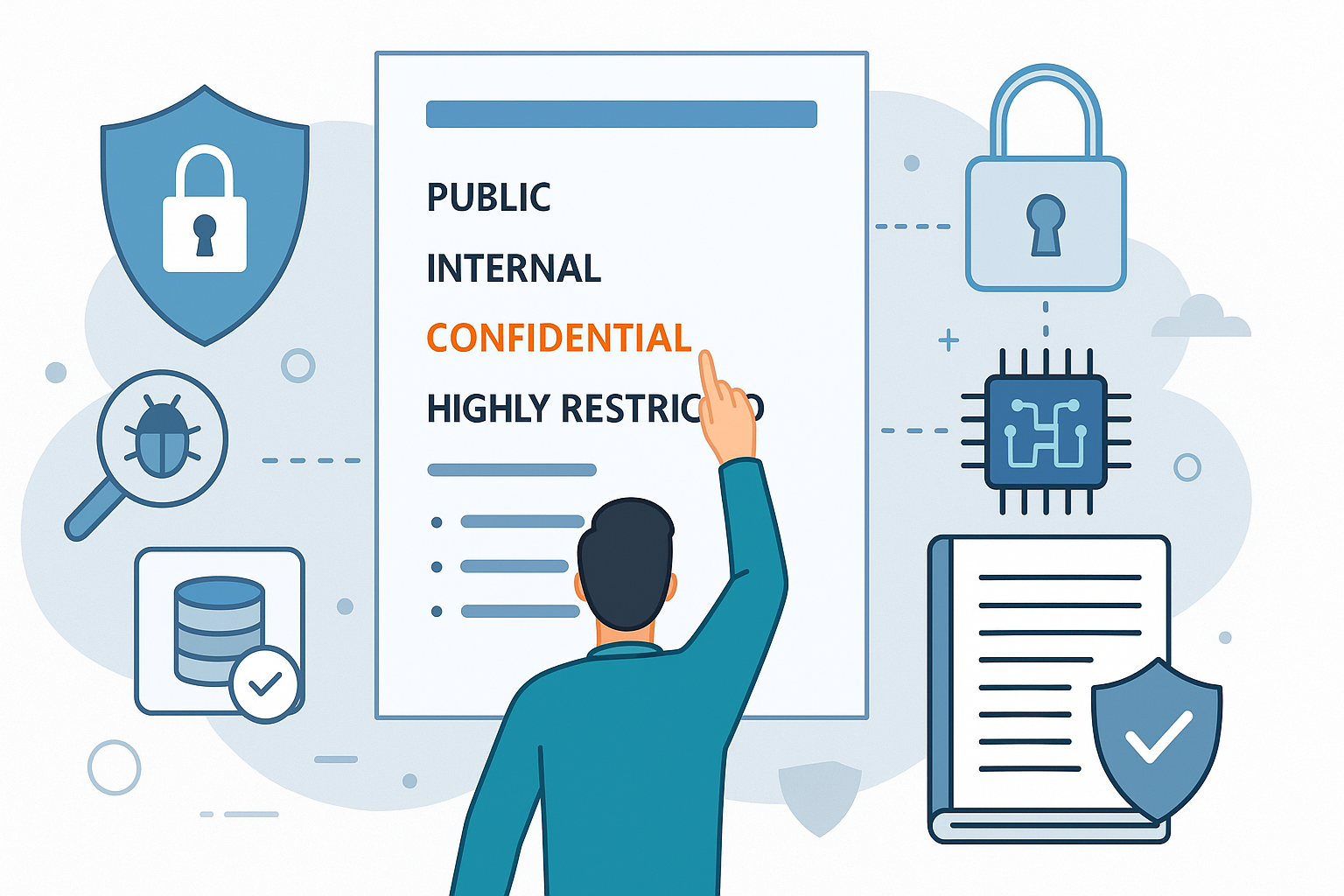
How Security Classification Guides Strengthen Data Protection in Modern Cybersecurity
A Security Classification Guide (SCG) defines data protection standards, ensuring sensitive information is handled securely across all levels. By outlining confidentiality, access controls, and declassification procedures, SCGs strengthen cybersecuri

Artificial Intelligence – A Growing Field of Study for Modern Learners
Artificial Intelligence is becoming a top study choice due to high job demand and future scope. This blog explains key subjects, career opportunities, and a simple AI study roadmap to help beginners start learning and build a strong career in the AI

Java in 2026: Why This ‘Old’ Language Is Still Your Golden Ticket to a Tech Career (And Where to Learn It!
Think Java is old news? Think again! 90% of Fortune 500 companies (yes, including Google, Amazon, and Netflix) run on Java (Oracle, 2025). From Android apps to banking systems, Java is the backbone of tech—and Sulekha IT Services is your fast track t